Warm White vs Cool White LED: Which Light Is Right for Your Home in Bangladesh?
Light November 19, 2026
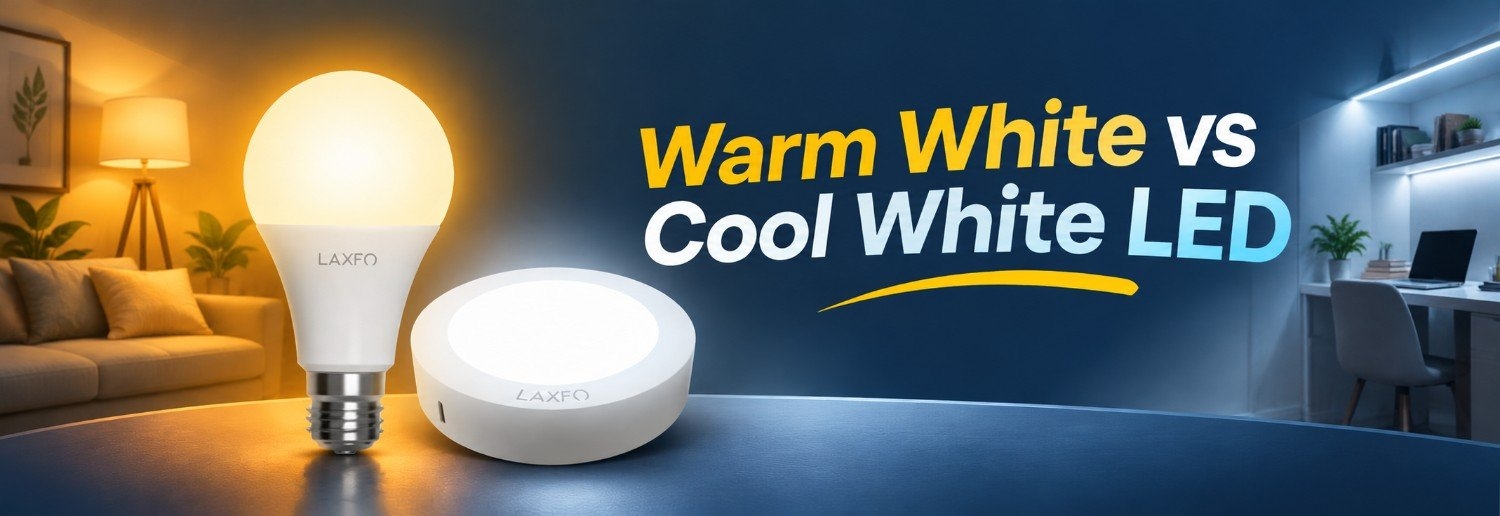
Standing in the lighting aisle of a shop in Nawabpur Road, or scrolling through an online platform late at night, you will notice something odd: two LED bulbs with the same wattage and almost the same price can look completely different once you switch them on. One fills the room with a cosy, golden glow; the other throws a crisp, bluish-white light that feels more like a clinic.
This guide settles the warm white vs cool white LED question for homes and businesses in Bangladesh. You will learn what colour temperature really means, which rooms each type of light suits best, how the two affect your eyes and sleep, and what good bulbs cost in taka right now. By the end, you will know exactly which bulb to buy for every room before you spend a single taka.
What Does Colour Temperature Actually Mean?
Every white light has a colour temperature, measured in kelvin (K). It describes the visual tone of the light, not its heat. Lower numbers look warmer: a candle flame is roughly 1,800K to 2,200K, glowing amber and orange. Higher numbers look cooler: an overcast sky at noon is about 6,500K, a crisp blue-white. Between them sits the neutral zone of 3,500K to 4,500K, which most people read as a clean, balanced white.
Here is the trap for buyers in Bangladesh: brand labels are inconsistent. One packet marked Daylight may hold a 6,500K bulb, another brand uses the same word for 5,000K, and some packets marked Cool White are actually 4,000K. The kelvin number printed on the box is the only reliable guide. As a rule of thumb: 2,700K to 3,000K is warm white, 3,500K to 4,500K is neutral white, and 5,000K to 6,500K is cool white or daylight.
What Is Warm White LED? (2,700K to 3,000K)
Warm white is the successor of the old filament bulb. It carries a soft yellow-amber tint that most Bangladeshi households grew up with, and it makes a room feel relaxed, intimate and settled. Skin tones look healthier, wooden furniture and terracotta floors look richer, and the light stays gentle on the eyes after sunset.
It is the right choice anywhere people rest or gather: bedrooms, drawing rooms, dining spaces, hotel rooms, restaurants, cafes and prayer halls. Its weakness is colour accuracy and contrast. Fine print looks slightly soft under 2,700K light, and tasks that depend on seeing true colours, such as matching fabric or reading a wiring diagram, become harder. Warm white relaxes you; it does not sharpen you.
What Is Cool White LED? (5,000K to 6,500K)
Cool white, often sold in Bangladesh under the name Daylight, is a crisp white with a visible blue edge. At equal wattage it reads as brighter than warm white, because the eye perceives blue-rich light as more intense. It imitates noon daylight, which is exactly why it keeps you alert: focus, reaction time and energy levels all respond to it.
That alertness makes it ideal for work surfaces and commercial spaces: kitchens, bathrooms, study rooms, offices, retail counters, garments floors, clinics, garages, staircases and outdoor security lights. The same property is its drawback inside a home. A bedroom lit at 6,500K feels like a hospital ward, dinner loses its appetite appeal. Cool white is a tool for attention, not for unwinding.
Warm White vs Cool White: Side-by-Side Comparison
Feature | Warm White | Cool White |
Colour temperature | 2,700K to 3,000K | 5,000K to 6,500K |
Light appearance | Soft yellow-amber, like old filament bulbs | Crisp white with a bluish tone, like noon daylight |
Mood it creates | Cosy, calm and relaxing | Alert, focused and energetic |
Perceived brightness | Looks softer and dimmer | Looks brighter at the same wattage |
Blue light content | Low | High |
Effect at night | Gentle; supports natural sleep | Can suppress melatonin and delay sleep |
Colour rendering | Flatters wood, fabric and skin tones | Shows colours closer to daylight truth |
Best suited for | Bedrooms, drawing rooms, dining, restaurants, prayer halls | Kitchens, bathrooms, studies, offices, shops, clinics |
Common label in Bangladesh | Warm White or Soft White | Daylight or Cool White |
Same watts, same bill: colour temperature changes appearance, not consumption.
One clarification worth repeating: switching between warm white and cool white does not change your electricity bill. Colour temperature is a property of appearance, while consumption depends on wattage. A 9W warm white bulb and a 9W cool white bulb draw exactly the same power and produce roughly the same number of lumens; they simply look different.
Which Is Better for Your Eyes and Sleep?
Neither colour damages your eyes by itself; quality does. Eye strain comes from flicker, glare and poor drivers, which are common in the cheapest no-name bulbs, so choose lamps with a colour rendering index (CRI) of 80 or above and a stable, flicker-free driver.
The real difference shows up at night. Blue-rich light, which cool white and daylight bulbs carry in quantity, suppresses melatonin, the hormone that tells your body it is time to sleep, as the Sleep Foundation summarises in its review of light and sleep research. That is why falling asleep in a daylight-lit bedroom is harder, and why late-night study under 6,500K lamps can leave you restless.
Room-by-Room Lighting Guide for Bangladeshi Homes
Room | Recommended light | Why |
Bedroom | Warm white, 2,700K to 3,000K | Relaxation and better sleep; low blue light in the evening |
Drawing room | Warm to neutral, 3,000K to 4,000K | Welcoming for guests, still bright enough for conversation |
Dining area | Warm white, 2,700K to 3,000K | Food looks appetising and meals feel unhurried |
Kitchen | Cool white, 4,000K to 5,000K | Clean look; chopping and cooking stay visible and safe |
Bathroom and mirror | Cool white, 5,000K to 6,000K | Closest to daylight for grooming and shaving |
Study room | Neutral to cool, 4,000K to 5,000K | Sharp contrast for reading; switch to warm after 9 pm |
Children's room | Neutral, 3,500K to 4,000K | One bulb that serves both play and homework |
Staircase and garage | Cool white, 5,000K to 6,500K | Maximum visibility and safety underfoot |
Balcony and outdoor | Cool white, 5,000K to 6,500K | Security lighting that reads brightest from the street |
If a room serves two opposite purposes, such as a study that doubles as a bedroom, consider a CCT-selectable bulb. These lamps switch between roughly 3,000K, 4,500K and 6,500K with a wall switch and cost only a little more than a fixed-colour bulb from most local brands. They solve the one-room-two-moods problem without rewiring anything.
Warm White vs Cool White for Shops, Offices and Restaurants
In commercial spaces the answer leans cool. Retail counters, showrooms and garments inspection lines need colour accuracy and sustained alertness: 4,000K to 5,000K with a high CRI keeps fabric colours honest and quality defects visible. Clothing and jewellery showrooms that moved from old tube lights to high-CRI LED often find their products simply look better, which is worth far more than the price of a bulb.
Offices sit best at 4,000K neutral white: alert without the harsh blue edge of 6,500K. Restaurants, cafes and hotel lobbies should stay warm at 2,700K to 3,000K, because warm light makes food look rich and encourages guests to linger. Clinics and laboratories use cool white for examination areas, while many mosques choose warm light for the main prayer hall and cooler light for wudu areas and libraries. In every case, colour does not change running cost; wattage does.
LED Buying Tips for Bangladesh: Voltage, Lumens and Prices
Bangladesh's nominal supply is 220V, but real-world voltage fluctuates sharply by area and season, and cheap bulbs are usually the first casualty. Choose lamps rated for a wide input range, typically 150V to 250V, or marketed as surge protected or AC-DC capable. The extra taka up front is cheaper than replacing dead bulbs every few months.
Judge brightness in lumens, not watts. A good LED produces 80 to 100 lumens per watt, so a 9W bulb should deliver around 800 lumens, close to an old 60W filament bulb. If a packet advertises big wattage-equivalence numbers but hides the lumen figure, treat that as a warning sign about the chip inside.
Popular LED Bulb Models from LAXFO Electronics
Bulb Model | Current Price | Notes |
950 BDT | Great for the areas with frequent loadshedding. |
|
290 BDT | A budget friendly option for the spaces where less energy efficiency and smart features are needed. |
|
425 BDT | Great for the areas where bright light with a wide beam angle is needed. |
|
755 BDT | A premium option with high wattage, low energy consumption rate. |
Common Mistakes to Avoid
-
Lighting the whole house with one colour: A full-warm home feels dull in the kitchen; a full-cool home never lets anyone relax. Match the temperature to each room instead.
-
Believing cool white means more light: Brightness is measured in lumens and set by wattage; colour only changes how that light feels.
-
Chasing the lowest price without checking CRI and flicker: A bulb that costs Tk 20 less but flickers all evening costs your eyes far more.
-
Installing 6,500K daylight bulbs in bedrooms: Then everyone wonders why the family sleeps badly and wakes up tired.
-
Mixing very different temperatures in one line of sight: A 3,000K ceiling light beside a 6,500K table lamp makes the room look patched together.
Frequently Asked Questions
Is warm white or cool white better for your eyes?
For eye comfort, quality matters more than colour: a flicker-free bulb with CRI 80 or above is gentle in either temperature. As a rule, cool white suits daytime work because it sharpens contrast, while warm white is easier on the eyes in the evening. If you read or use screens at night, warm or neutral light is the kinder choice.
Which is brighter: cool white or warm white?
At the same wattage they produce nearly the same lumens, but cool white looks brighter because the eye perceives blue-rich light as more intense. If you need genuinely more light, buy a higher wattage or check the lumen figure on the packet, rather than switching colour.
What is 6,500K daylight light used for?
Daylight bulbs imitate noon sun and belong where accuracy and alertness matter: bathrooms, kitchens, morning study lamps, offices, showrooms, clinics, garages and outdoor security. They are a poor fit for bedrooms and dining spaces, where their blue edge feels clinical.
Which LED colour is best for sleeping?
Warm white, ideally 2,700K or lower for the last hour before bed. Blue-rich cool light suppresses melatonin and delays sleep, while warm amber-toned light lets the body wind down naturally. Dim the lights as bedtime approaches for the best effect.
Which costs more in Bangladesh: warm white or cool white?
Nothing; colour temperature barely affects price. A standard 5W to 12W bulb of either colour typically costs Tk 90 to Tk 250 depending on brand and series. Price differences come from wattage, brand, warranty and features such as rechargeable backup or CCT switching.
The Bottom Line
The warm white vs cool white debate is not a contest with one winner; it is a matching exercise. The warm light that suits your bedroom may not be the right choice for your bathroom or kitchen. The kitchen, on the other hand, needs good visibility, so cool white light can be a great option there. That’s why price shouldn’t be your first priority. First, determine what type of light your space needs. Then visit your nearest retail shop and compare multiple options. Check crucial details such as after-sales service and warranty period. If you keep this sequence in mind before spending your money, you can easily find a quality LED bulb that suits your space and protects your investment.
Related Blogs