How to Wire a Light Switch at Home
Light June 25, 2026
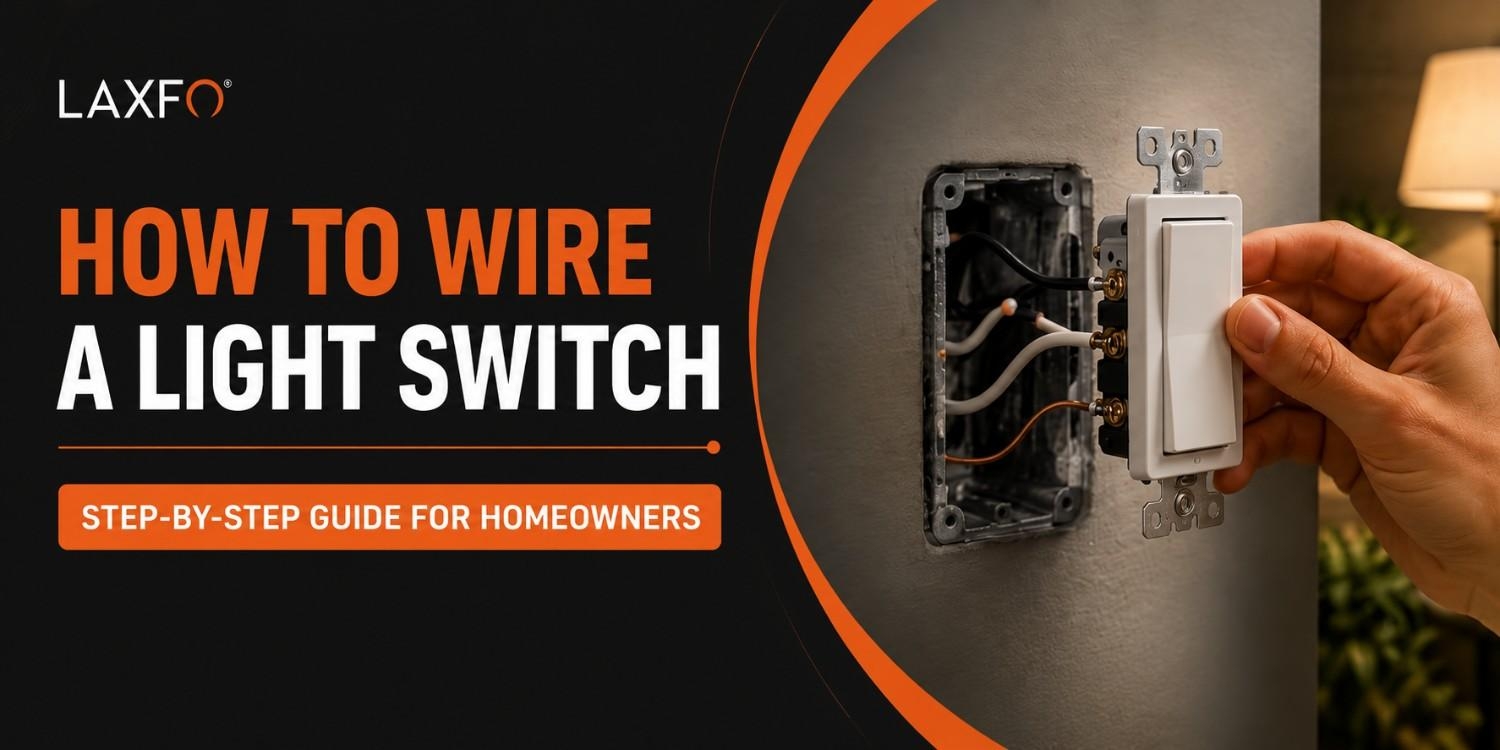
A light switch that suddenly stops working is one of those small home problems that feels bigger than it is. The bulb is fine, the wiring is fine, but the moment you flip the switch, nothing happens. If you have ever wondered how to wire a light switch yourself instead of waiting for an electrician's schedule to open up, the good news is that this is one of the simplest electrical jobs you can learn to do safely.
This guide walks you through the entire process, from the tools you need to the exact wire connections, written specifically with Bangladeshi homes and standard 220 to 230 volt wiring in mind.
By the end, you will know exactly what to check, what to connect, and when it makes more sense to call a professional instead.
Tools and Materials You Will Need
Before you touch a single wire, gather everything you need so you are not hunting for a screwdriver halfway through the job.
-
A flathead and a Phillips screwdriver
-
A voltage tester
-
A wire stripper or a small cutting plier
-
Electrical tape
-
A switch plate and gang box, if you are installing fresh wiring
-
The light switch itself
It is worth spending a little extra on the switch. One with sturdy terminal screws and solid internal contacts lasts longer and resists the heat buildup that causes flickering or burnt switches over time. LAXFO's range of switches is built with exactly this kind of daily reliability in mind, which matters more than people realize until a cheap switch starts giving trouble.
Safety Checks Before You Touch Any Wire
This is the part of the guide you should never skip, even if you feel confident. Electrical work is forgiving when you follow the basics and dangerous when you do not.
Start by turning off the breaker for the specific circuit you are working on, not just the switch itself. Many Bangladeshi homes share circuits across more than one room, so a switch being off does not always mean the wire behind it is dead.
Next, use your voltage tester to confirm there is no current flowing before you touch any wire with bare hands. This one habit prevents the vast majority of home electrical accidents.
Avoid working with wet hands, and skip the job during heavy rain if your home has exposed wiring nearby.
Phase, Neutral, and Earth Wires Explained
Every switch board has three wires doing three different jobs, and understanding what each one does matters more than memorizing colors.
The phase wire, sometimes called the line wire, carries current from your meter board to the switch and on to the light point. The neutral wire completes the circuit, carrying current back once it has done its job. The earth wire is a safety path that protects you and the wiring if something goes wrong inside the circuit.
In most Bangladeshi homes, the common convention is red for phase, black for neutral, and green for earth. This older color standard is still widely used across the region. Newer wiring in some apartments and commercial buildings follows the updated international standard instead, using brown for phase, blue for neutral, and green with a yellow stripe for earth.
Because both conventions exist side by side in different buildings, never assume a wire's job purely from its color. Confirm with your voltage tester first, every time. That single habit will save you from more mistakes than any color chart ever could.
Worth Reading: How to Replace a Light Switch in Simple Steps
How to Wire a Single Pole Light Switch, Step by Step
A single pole switch is the most common type in any home. It controls one light from one location, and once you understand the logic, the wiring itself takes only a few minutes.
Step 1: Cut the power
Turn off the breaker for the circuit and confirm with your voltage tester that no current is reaching the switch box.
Step 2: Remove the old switch
If you are replacing an existing switch, unscrew the plate and gently pull the switch out of the gang box. Take a quick photo of the existing wiring before you disconnect anything. It becomes your backup plan if anything feels confusing later.
Step 3: Identify your wires
You should see an incoming phase wire bringing power into the box, and an outgoing wire carrying power to the light point. If the box has more wires than expected, pause and check with your tester rather than guessing.
Step 4: Prepare the wire ends
If the copper looks worn or oxidized, trim it back and strip a fresh half inch of insulation. Clean wire ends make for a safer, longer lasting connection.
Step 5: Connect the incoming phase wire
Attach it to one terminal screw, wrapping the wire clockwise so tightening the screw pulls the connection snug.
Step 6: Connect the outgoing wire
Connect the wire running to the light fixture to the second terminal screw. On most single pole switches, it does not matter which terminal gets which wire, since the switch simply opens or closes the connection between them.
Step 7: Connect the earth wire
If your switch has an earth terminal, use it. Not every basic switch includes one, but if yours does, this is a real safety feature, not a formality.
Step 8: Tuck the wires and mount the switch
Fold everything neatly into the gang box so nothing is pinched, then screw the switch into place.
Step 9: Replace the cover plate
Line up the cover plate and secure it with its mounting screws, making sure no wires are pinched underneath.
Step 10: Restore power and test
Turn the breaker back on and flip the switch. A smooth on and off means you wired it correctly. If the switch plate feels warm or the light flickers, cut the power again and recheck every connection before using it further.
Read More: 10 Benefits of Smart Switches for Homes
Common Wiring Mistakes to Avoid
Even simple wiring jobs go wrong in predictable ways. Mainly three types of mistakes are made in most cases-
-
Mistake 1: Connecting the neutral wire instead of the phase wire leaves the circuit live even when the switch is off, since a switch should only interrupt the phase.
-
Mistake 2: Skipping the voltage tester because you assume the breaker is off is another common one, and breakers do get mislabeled.
-
Mistake 3: Mixing wire gauges under the same terminal creates an uneven connection that loosens faster.
-
Mistake 4: In homes with shared circuits, it is easy to switch off one breaker and assume the whole room is dead. Always verify with your tester, every time.
Worth Reading: Top 12 Switch Socket Brands in Bangladesh
When to Call a Professional Electrician
Replacing a single switch is a manageable task for most homeowners, but a few situations call for a licensed electrician instead.
If your home's wiring is old, undocumented, or you genuinely cannot tell what you are looking at inside the switch box, stop and call someone qualified. The same goes for anything touching your main distribution board, or any moment where you feel truly uncertain partway through the job.
Knowing when to stop is part of doing electrical work safely, not a failure to do it yourself.
Frequently Asked Questions
Can I wire a light switch myself without an electrician?
Yes, for a standard single pole switch, most homeowners can do this safely as long as the power is properly turned off and verified with a voltage tester first.
Does it matter which terminal the phase wire connects to?
No. On a basic single pole switch, both terminals work the same way, since the switch simply opens or closes the connection between them.
Why is my new switch not working after I wired it?
The most common causes are a loose terminal screw, the wrong breaker turned off during testing, or the phase and neutral wires accidentally swapped. Cut the power again and recheck each connection.
Can one switch control both a light and a fan?
Yes, as long as both are on the same circuit and the combined load fits what the switch and wiring are rated for. If you are unsure of the load, check with an electrician first.
Is it safe to skip the voltage tester if I already turned off the breaker?
No. Breakers can be mislabeled or shared across more circuits than expected. A voltage tester takes a few seconds and removes all the guesswork.
Final Thoughts
Wiring a light switch is one of those small home skills that pays off again and again, whether you are fixing a fault, upgrading an old switch, or just tired of waiting for an electrician's free afternoon. Follow the safety steps every time, take your time with each connection, and you will end up with a switch that works reliably for years. And when it is time to pick the switch itself, choosing a well-made one matters more than it seems.
Related Blogs